

Table of Contents
- Why Some Kids Resist Cooperative Games (And Why That's Normal)
- A Gradual Introduction Plan for Reluctant Children
- Easy Cooperative Games for Kids That Build Teamwork and Sharing
- Adapting Cooperative Games for Shy Kids
- Family Games That Encourage Cooperation at Home
- What to Do When a Child Refuses, Withdraws, or Gets Upset
- Conclusion
- Frequently Asked Questions
Last Updated: October 5, 2026
Why Some Kids Resist Cooperative Games (And Why That's Normal)
When a child hangs back from a group game, it is rarely a sign that they dislike playing.
A cooperative game is any game where players work toward one shared goal instead of competing against each other.
That single shift changes everything for a hesitant child. There is no scoreboard pressure and no fear of being the reason the group loses.
Common Reasons for Resistance
Reluctance usually has a reason behind it. Here are the most common ones we see:
- Fear of losing. A child who hates the sting of defeat may avoid games entirely.
- Shyness or slow warm-up. Some kids need ten minutes of watching before they join in.
- Loud, fast group energy. Big groups and big voices can feel like too much.
None of this means your child cannot learn to love cooperative play. It means the entry point needs to be gentler.
A Gradual Introduction Plan for Reluctant Children
The fastest way to lose a hesitant kid is to drop them into a big group game on day one. Instead, build up in three stages. Each stage can take a day or a few weeks, depending on your child.
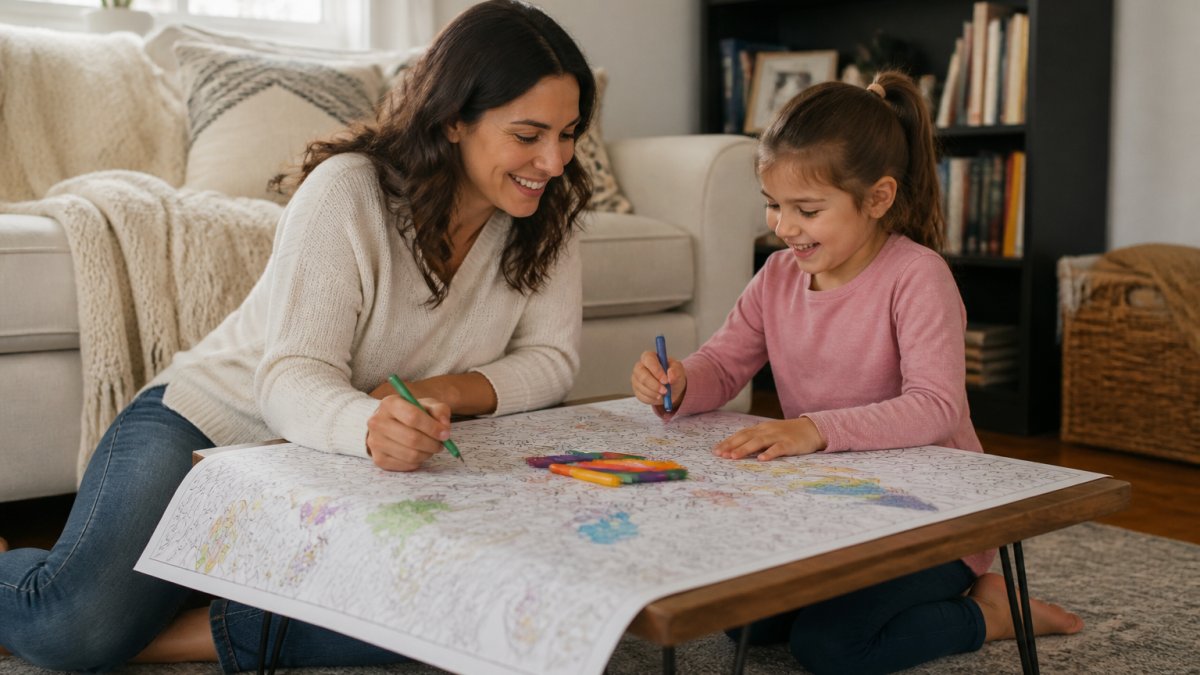
Step 1: Start With Parallel Play
Parallel play means two people doing the same activity side by side, without needing to interact. Hand out crayons and let your child color next to you. No talking required. No rules. The goal is simple: being near someone else feels safe and pleasant.
Step 2: Add Simple Shared Goals
Once your child is comfortable side by side, add one tiny shared goal. Try a giant word search where you hunt for words together. Every word found is a win for both of you. The task is shared, but the pressure is low.

Step 3: Introduce Full Cooperative Games
Now bring in a real cooperative game with a clear shared goal. Keep the group small, three or four players at most. Play one round, then stop while everyone is still having fun. Ending on a high note makes the next session easier.
Easy Cooperative Games for Kids That Build Teamwork and Sharing
Generic activity ideas are easy to find. What a hesitant child needs is a specific game with a known player count, a short round length, and a clear shared goal. Each one can be finished in 10 to 20 minutes, short enough to stop before a reluctant player hits their limit.
Starter Games by Age and Group Size
| Game | Players | Typical Age | Round Length | Why It Works for Hesitant Kids |
|---|---|---|---|---|
| Hoot Owl Hoot! | 2-4 | 4+ | 10-15 min | Players cooperate to get owls home before sunrise; no reading required |
| Count Your Chickens! | 2-4 | 3+ | 10 min | One shared goal, no individual score, very short turns |
| Race to the Treasure! | 2-4 | 5+ | 15 min | Builds a path together to beat the ogre; visual and low-verbal |
| The Secret Door | 2-4 | 5+ | 15 min | Memory-based, quiet, good for kids who dislike loud group energy |
| Hoot Owl Hoot! and similar Peaceable Kingdom titles | 2-4 | 3-7 | 10-15 min | Designed specifically as cooperative board games for young children |
| Snail's Pace Race | 2-6 | 3+ | 10 min | No winner at all; dice move snails, everyone watches together |
| Yoga Spinner | 2-4 | 4+ | 10 min | Movement-based, no talking required, good for sensory-seeking kids |
| Cooperative freeze dance | 3-8 | 3+ | 5-10 min | Music stops, everyone freezes together; no elimination |
Physical and Low-Equipment Options
If you do not want to buy anything, these work with items most households already have:
- Shared-timer relay. The group races a kitchen timer, not each other. Set it for 60 seconds and see how many beanbags the team can move.
- Stuffed-animal rescue. Kids work together to move a stuffed animal through a line of cones or pillows without dropping it.
- One-sheet drawing. Tape a large sheet of paper to the table. Everyone adds to the same picture. Nobody owns a section.
- Story round-robin. Each child adds one sentence to a shared story. You can write it down or just tell it out loud.
How to Pick the Right One
Match the game to the child, not the other way around:
- Very shy or slow to warm up: Start with Snail's Pace Race or a one-sheet drawing. No talking, no turns to miss.
- Fear of losing: Choose a game with no individual winner, such as Hoot Owl Hoot! or a shared-timer relay.
- Sensory-sensitive: Pick quiet, table-based games like The Secret Door. Skip anything with loud timers or fast movement.
- Short attention span: Keep rounds under 10 minutes. Count Your Chickens! and Snail's Pace Race fit this best.
A large table-sized coloring sheet, like our Learn With Me Table Size Coloring Sheet, works well as a warm-up before any of these. It gives kids a low-stakes way to share space before the game starts.

Adapting Cooperative Games for Shy Kids
Shy kids often need a role that does not require talking. Give them one. The child who hates being the caller can be the scorekeeper, the timer, or the person who hands out supplies.
Small groups beat big ones every time. Four kids is plenty. If your child is very shy, start with just one other child and you as the adult helper.
Scripts and Facilitation Language That Helps
The words you use matter more than the game you pick. Try these:
- "We're all on the same team, so we win or lose together."
- "You can watch for a minute first. Tell me when you're ready."
- "There's no wrong way to play this one."
- "What should our team try next?"
Notice what these do. They remove pressure, offer choices, and hand control back to the child.
Board Games Giant Word Search Puzzle →
Family Games That Encourage Cooperation at Home
Most articles stop at "pick a cooperative game." The harder part is running one at home with siblings of different ages, a competitive older child, and a parent who is also trying to manage dinner. This section covers the family-specific mechanics that generic game lists skip.
Set Up the Room Before You Set Up the Game
A reluctant child often resists before the first turn because the environment feels chaotic. A few small changes help:
- Clear the table completely. Visual clutter reads as "too much" to many kids.
- Put the box lid away. The lid shows the win condition and can spike anxiety in a child who fears losing.
- Sit at eye level. Kneeling or sitting on the floor next to a hesitant child lowers the power dynamic.
- Turn off background TV or music. Competing sound makes it harder for a child to track turns.
Assign Roles Instead of Turns
In a family game, every player can have a job that is not "take a turn." This is the single most useful adaptation for a reluctant child:
- The reader reads clue cards out loud.
- The mover moves the shared piece.
- The timer watches the clock and calls out time.
- The checker verifies the team's answer against the card.
A child who will not take a turn will often happily be the timer. That is participation, and it counts.
Handling Sibling Conflict Mid-Game
When one child grabs the piece or sulks, the game is no longer the point. Try these in order:
- Pause, don't lecture. Say, "Let's take a breath." Do not explain why grabbing is wrong in the middle of the game.
- Name the shared goal again. "We're trying to get all the owls home before sunrise. What should we try next?"
- Offer a role swap. "Do you want to be the mover for this round?"
- End the round early if needed. A short, calm ending beats a long, tense one.
Keep Sessions Short and Predictable
Twenty minutes is plenty for kids under eight. End while everyone is still having fun. A predictable routine helps more than a long session:
- Same time of day (after snack, before bath).
- Same spot at the table.
- Same closing ritual, such as stacking the pieces together or saying "good game, team."
Measuring Progress Without Pressure
Do not track wins. Track willingness. Over a few weeks, watch for these small signs:
- The child stays in the room for the whole round.
- The child takes one turn without being asked twice.
- The child speaks to another player during the game.
- The child asks to play again, even if only for one round.
Any of these is progress. None of them require the child to win, and none of them require you to point out that they are improving.
What to Do When a Child Refuses, Withdraws, or Gets Upset
Stop the game. Do not push, bargain, or bribe. A child who is upset is not learning anything, and forcing the issue makes the next attempt harder.
Try this instead:
- Acknowledge the feeling. "It looks like that felt like too much."
- Offer a quiet exit. "You can sit here with me and watch."
- Try again later, not now. Give it a day or two.
- Shrink the ask. Next time, try parallel play again.
Withdrawal is not failure. It is information. It tells you the group was too big, the game too long, or the timing wrong.
Conclusion
Every child warms up to group play at their own speed, and the slow path usually sticks better than the fast one. Cherry Creek Lane makes giant, table-sized coloring sheets and word search puzzles that give families a low-pressure way to share space and build teamwork before the games even start. Our sheets, like the Board Games Giant Word Search Puzzle and the Together Achieve More Table Size Coloring Sheet, are made in the USA, shipped from Utah, and built for crayons, markers, and colored pencils.

Frequently Asked Questions
How do you get a reluctant child to join a group game?
Start small. Offer a low-pressure role like handing out pieces or keeping score, so the child participates without feeling exposed. Sit nearby and play yourself, narrating what you're doing. Most kids join within a few minutes once they see it's safe and fun. If they still hang back, let them watch and try again later. Forcing participation usually backfires and makes the next attempt harder.
What are some easy cooperative games for kids?
Simple options include a giant word search, like our Toys We Love Giant Word Search Puzzle, where everyone hunts for words together, or a group coloring sheet, such as the Learn With Me Table Size Coloring Sheet, where each person adds their own colors to one shared picture. These games work because there's no single winner. Everyone contributes to the same goal, which takes pressure off kids who worry about losing.
What should you do if a child refuses to play a cooperative game?
Don't push. Acknowledge the refusal calmly and offer alternatives: watching, drawing nearby, or joining later. Sometimes a child needs to see the game in action before trying it. If the refusal comes from anxiety, try a smaller group or a partner activity first. Give the child control over when to join, and keep the invitation open without pressure.
How long should a cooperative game last for young children?
For kids ages 3 to 5, aim for 10 to 15 minutes. Ages 6 to 8 can usually handle 20 to 30 minutes if the game keeps them engaged. Watch for signs of fatigue or frustration and wrap up before meltdowns start. Ending on a positive note makes kids more likely to try again next time. A giant coloring sheet or word search works well because kids can stop and start without disrupting the group.