

Table of Contents
- What Are Giant Coloring Sheets and Why Parents Are Buying Them
- The Real Value: Are Giant Coloring Sheets Worth the Investment?
- Large Coloring Posters for Kids: Sizing and Space Considerations
- Giant Coloring Sheet Activities for Groups: Collaboration and Learning
- Paper Quality and Durability: What Separates Good from Cheap
- Best Markers for Giant Coloring Posters: Medium Compatibility Guide
- Giant Coloring Sheets vs. DIY Printables: The Honest Comparison
- Storage, Preservation, and Long-Term Use
Last Updated: August 26, 2026
What Are Giant Coloring Sheets and Why Parents Are Buying Them
Giant coloring sheets are oversized paper activities, typically measuring 30 inches by 50 inches, that transform any table or wall into a canvas for creative expression. Unlike traditional coloring books, these large-format designs offer intricate patterns and expansive surface coverage that invite extended engagement. Parents, educators, and grandparents increasingly turn to giant coloring sheets as a proven antidote to screen fatigue, reclaiming family time without tablets or streaming services.
At Cherry Creek Lane, we've watched demand grow as families recognize that kids will sit quietly for hours when given the right tool. The appeal runs deeper than entertainment. These sheets deliver genuine developmental benefits while creating unstructured, creative moments that build family bonds.
What distinguishes giant coloring sheets from printables or traditional coloring books comes down to three factors: scale, durability, and the collaborative nature they encourage. A 30-by-50-inch sheet invites multiple children to work simultaneously without crowding. Paper weight and material quality determine whether markers bleed through or colors stay vibrant after weeks of use. Quality giant sheets feel intentional, signaling to kids that their creative time matters.
The Real Value: Are Giant Coloring Sheets Worth the Investment?
The honest answer depends on what you're comparing them against and what outcome you're chasing. If you're weighing a $19.99 giant coloring sheet against printer paper, yes, you're paying more upfront. But the calculation shifts when you factor in engagement duration, durability, and actual value.

Screen-Free Engagement That Actually Works
Giant coloring sheets succeed where many screen-free alternatives fail because they're genuinely engaging for extended periods. The scale matters psychologically. A child approaching a 30-by-50-inch canvas experiences it differently than a standard 8.5-by-11-inch page. Intricate designs give kids meaningful work to do. They're discovering hidden details, making color choices, and seeing tangible progress.
A quality giant coloring sheet can hold a child's attention for 45 minutes to two hours in a single session (peer-reviewed research). Over a month, that's 10-20 hours of focused, screen-free activity from a single $19.99 sheet. Compare that to cumulative streaming costs or app purchases, and the math favors the physical product.
How Long Kids Stay Engaged
Toddlers and preschoolers work in 15-30 minute bursts but return to the same sheet multiple times over days or weeks. Older children, aged 6 to 10, often sustain 45 minutes to 90 minutes of continuous coloring, especially when working collaboratively. Designs with hidden objects or educational elements extend engagement because kids have secondary objectives beyond coloring.
What surprises many parents is that kids return to partially completed sheets weeks later with fresh ideas. This revisit behavior is rare with traditional coloring books, where completion signals the end of engagement.
Large Coloring Posters for Kids: Sizing and Space Considerations
The physical dimensions of a giant coloring sheet determine where it fits in your home and how many children can use it simultaneously.
Table-Sized vs. Wall-Sized: Which Works Better
The standard Cherry Creek Lane giant coloring sheet measures 30 inches by 50 inches. This dimension is deliberate. It's large enough to accommodate 2-4 children working simultaneously without crowding, yet manageable enough to fit on a dining table, kitchen island, or floor space. The 30-inch width allows two children to sit across from each other with dedicated space; the 50-inch length gives each child roughly 25 inches of working area.
Wall-sized alternatives present practical challenges. A 4-by-6-foot poster requires permanent mounting, limits marker application (overhead work tires arms quickly), and makes the activity feel like a chore. Table-sized sheets win because they're flexible. You can use them on a table for seated work, spread them on the floor for younger children, or tape them to a wall temporarily for novelty.
Fitting Multiple Children on One Sheet
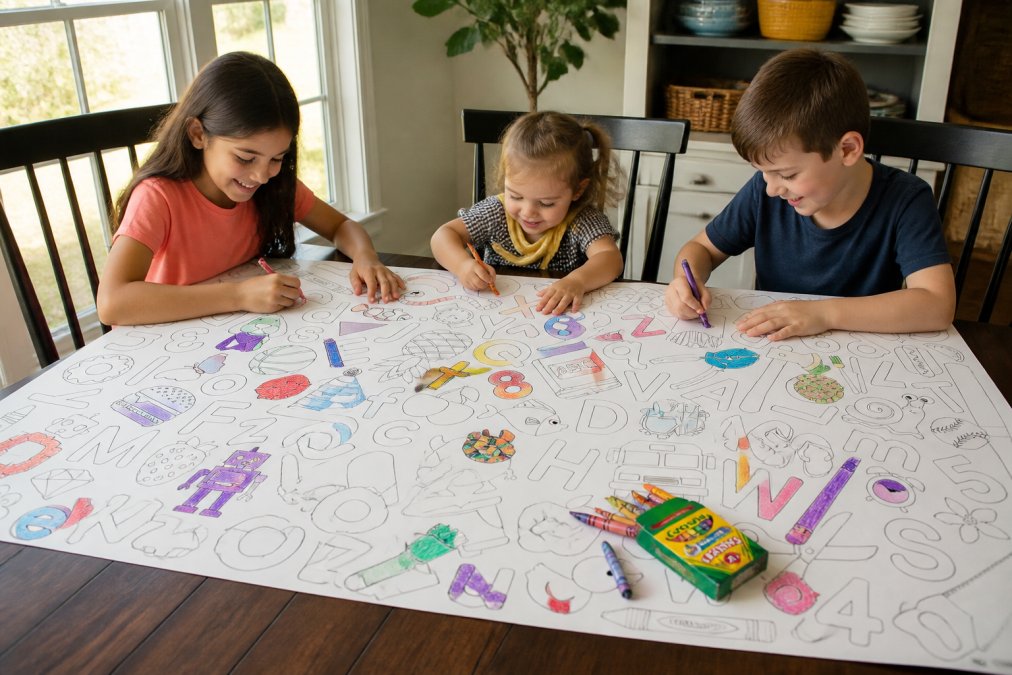
A single 30-by-50-inch sheet comfortably accommodates 2-3 children working independently, or up to 4 with coordination. For two children, each gets roughly half the sheet. For three, divide into thirds by design elements. A pirate sheet, for example, might have one child color the ship, another the water and sea creatures, and a third the sky and clouds.

The real value emerges in mixed-age situations. A 3-year-old and a 7-year-old can work on the same sheet without requiring separate products. The younger child colors large, simple areas while the older child tackles intricate details. Giant coloring sheets scale naturally across age ranges in ways DIY printables cannot.
Giant Coloring Sheet Activities for Groups: Collaboration and Learning
Group coloring transforms a solitary activity into a social experience, changing engagement and developmental outcomes.
Building Fine Motor Skills and Sensory Development
Coloring builds fine motor skills through repetitive gripping, pressure control, and hand-eye coordination. Giant coloring sheets amplify this benefit because the larger surface area encourages fuller arm movement and sustained hand control.
Younger children benefit from the gross motor component. Reaching across a 50-inch-long sheet requires arm extension and core stability. The varied textures of different coloring tools provide sensory input that supports neural development.
Older children develop the fine motor precision required for academic skills like handwriting. Intricate designs demand controlled, deliberate strokes. A child carefully coloring within fine lines is practicing the same motor control needed for cursive writing.
Mixed-Age Group Success
Giant coloring sheets work across age ranges without requiring separate products. A homeschooling family with children aged 3, 6, and 9 can use a single sheet effectively. Each child finds appropriate challenge at their developmental level. A 3-year-old works on large, open areas. A 6-year-old practices staying within lines. A 9-year-old pursues intricate details and experiments with color theory.
This natural differentiation reduces friction. There's no need to buy separate products or simplify designs. Older children naturally mentor younger ones, showing techniques and offering encouragement. The activity becomes collaborative creation rather than individual achievement. digital puzzle pricing.
Paper Quality and Durability: What Separates Good from Cheap
Not all giant coloring sheets are created equal. The difference between a sheet that survives weeks of enthusiastic marker use and one that falls apart after a single session comes down to paper weight, fiber composition, and bleed resistance.
Bleed-Resistant Paper and Marker Compatibility
Bleed-resistance is the single most important quality metric for giant coloring sheets, particularly with markers. A bleed-resistant sheet allows marker ink to sit on the surface without soaking through to the back. This preserves longevity, prevents staining surfaces beneath the sheet, and maintains vibrant color intensity.
Low-quality paper absorbs marker ink immediately, causing colors to appear dull. Quality sheets engineered for marker compatibility use a coating or paper composition that resists absorption while accepting crayon and colored pencil application.
Cherry Creek Lane sheets work seamlessly with crayons, markers, and colored pencils. This versatility means families aren't locked into a single medium.
Paper Weight (GSM) and Longevity
Paper weight, measured in grams per square meter (GSM), directly correlates with durability (iso.org). Standard printer paper is typically 80 GSM, thin and prone to tearing (tappi.org). Quality coloring sheets start at 120 GSM and often reach 150-200 GSM for premium products.
Higher GSM means thicker, more durable paper that withstands repeated coloring and handling. A 150 GSM sheet survives weeks of active use by multiple children. A 200+ GSM sheet approaches poster-board durability.
After 10-15 hours of coloring, a low-GSM sheet shows visible wear, creasing, and slight tears. A quality 150+ GSM sheet remains structurally intact and color-vibrant.
Best Markers for Giant Coloring Posters: Medium Compatibility Guide
Choosing the right coloring medium dramatically affects the final result and sheet longevity.
Crayons, Markers, and Colored Pencils: What Works Best
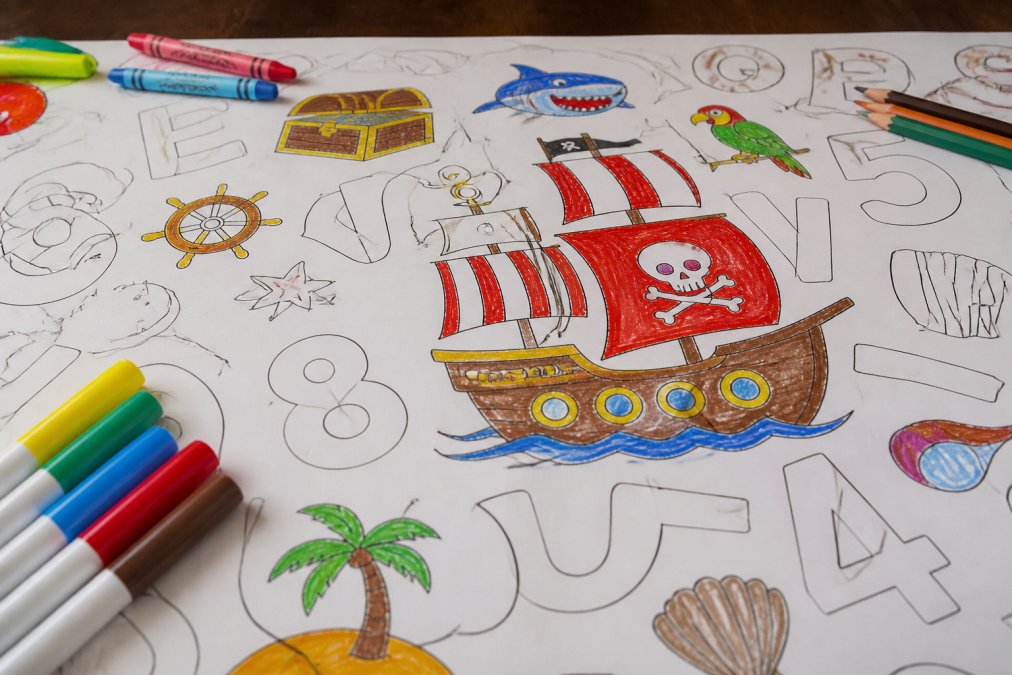
Markers deliver the most vibrant, saturated colors and work fastest for large surface coverage. Quality markers designed for paper work best. Crayons offer excellent control for younger children and produce rich, opaque color without bleeding. They encourage sustained pressure and hand control that builds fine motor skills. Colored pencils enable precision and blending, ideal for older children pursuing detailed work. They require more pressure and fine motor control, making them less suitable for very young children.
For mixed-age families, the best approach is offering all three options and letting kids self-select.
Avoiding Bleed-Through and Damage
Use markers designed for paper, not permanent markers. Paper-based markers deposit ink on the surface rather than soaking through. Apply moderate pressure to avoid forcing ink deeper into paper fibers. Allow wet ink to dry before layering additional color. Use quality paper (150+ GSM) that resists tearing and maintain a clean, flat work surface.
Giant Coloring Sheets vs. DIY Printables: The Honest Comparison
Why pay $19.99 for a giant coloring sheet when you can print coloring pages at home for essentially free?
Printing costs include materials ($1-3) plus ink ($0.10-0.15 per page), totaling $3-5. Assembling 20-30 pages into a cohesive sheet takes 30-45 minutes. Printed sheets are 20 lb bond paper (roughly 75 GSM), the same weight as office paper. They bleed immediately with markers, and tape seams are vulnerable to tearing. A DIY sheet survives 3-5 hours of active use before tape fails.
A quality giant coloring sheet survives weeks. Professional designs feature intricate details that reward sustained engagement. The true value proposition isn't the paper itself, it's design quality, durability, convenience, and the message that your child's creative time is worth investing in.
For families with multiple children or plans to reuse sheets across siblings, the per-use cost drops dramatically. A $19.99 sheet used by three children for 15 hours each is roughly $0.44 per child per hour of engagement.
Storage, Preservation, and Long-Term Use
One overlooked advantage of quality giant coloring sheets is their ability to be stored and revisited. Roll the sheet rather than folding it, as folding creates permanent creases. Store rolled sheets in a cool, dry place away from direct sunlight, which fades colors.
For particularly valued sheets, consider preserving them as art. A completed giant coloring sheet is a meaningful record of a child's development. Some families frame favorite sheets or photograph them before storing.
Storage also enables reuse. A partially completed sheet can be stored and returned to weeks later. Kids often approach a paused project with fresh perspective and renewed creativity.
Giant coloring sheets deliver measurable value when you factor in engagement duration, developmental benefits, and family bonding. The investment is worthwhile if you're seeking genuine screen-free alternatives that scale across mixed-age groups. Cherry Creek Lane's collection of table-sized coloring sheets, including designs like the ABC 123 Table Size Coloring Sheet ($19.99) and the Space Table Size Coloring Sheet ($19.99), offers the durability, design quality, and made-in-the-USA construction that make the investment pay dividends across weeks of use. Whether you're a parent seeking focused engagement, a grandparent looking for meaningful activities, or an educator building collaborative learning tools, quality giant coloring sheets represent a tangible return on your investment in screen-free, creative family time. Shop Coloring Sheets and discover how a single sheet can anchor hours of engagement.
Frequently Asked Questions
Will a giant coloring sheet actually keep multiple children engaged at the same time?
Yes, giant coloring sheets work well for mixed ages because there's enough space for each child to have their own section. A 30x50-inch sheet gives kids room to work independently without competing for space. Younger children focus on larger sections while older kids tackle intricate designs. The collaborative nature can reduce fighting over markers since everyone has their own area. Most families report extended periods of sustained engagement, especially with themed designs that spark imagination.
How do giant coloring sheets compare to printing pages at home for free?
Printable pages often require taping multiple sheets together to match the size of one giant coloring sheet, which can create weak seams that tear easily. Pre-made giant coloring sheets use high-quality, bleed-resistant paper designed for markers and crayons, while typical printer paper may show color bleeding and be less durable. The time investment in printing, cutting, and taping can sometimes outweigh the cost of buying a finished sheet. Plus, professional designs often offer intricate artwork that inspires longer engagement than basic printables.
What's the best way to store and preserve giant coloring sheets so they last?
Roll sheets loosely around a cardboard tube rather than folding them, which helps prevent permanent creases. Store in a cool, dry place away from direct sunlight to help prevent color fading. A flat storage box can also work well. If you want to reuse sheets, some families choose to laminate them or use a clear protective film, then color with dry-erase markers or washable markers. This can extend engagement and make them suitable for classroom or group settings where durability matters.
Which markers and coloring tools work best on giant coloring posters without bleeding through?
Crayons and colored pencils rarely bleed through any paper, making them a safe choice for young children. Quality markers designed for paper or cardstock often work well on giant coloring sheets with bleed-resistant paper. It's generally best to avoid permanent markers. Testing markers on a corner first is a good practice. The paper weight matters too: sheets made with thicker paper tend to resist bleeding better than thin printer paper. Cherry Creek Lane's sheets are designed to handle crayons, markers, and colored pencils without issues.
This article was written using GrandRanker