

Table of Contents
- What You'll Need Before You Start
- Step 1: Choose the Right Paper Weight for Durable Coloring Sheets
- Step 2: Pick Washable Coloring Supplies for Toddlers
- Step 3: Set Up Large Coloring Posters for Kids Without the Mess
- Step 4: Turn Sheets Into Reusable Coloring Mats for Toddlers
- Step 5: Store and Organize Printable Collections
- Common Mistakes That Ruin Durable Coloring Sheets for Toddlers
- Frequently Asked Questions
Last Updated: September 23, 2026
What You'll Need Before You Start
Durable coloring sheets for toddlers succeed or fail on three decisions made before any crayon touches paper: paper weight, coloring tools, and setup. Get those right and a single sheet survives weeks of use instead of one afternoon.
Here's what to gather before you begin:
- Heavy paper stock (65 lb or 80 lb cardstock, or a pre-printed heavy sheet)
- Washable chunky crayons, washable markers, or colored pencils
- Painter's tape or removable adhesive putty
- A plastic tablecloth or mat for underneath
- A storage folder or large flat bin
Step 1: Choose the Right Paper Weight for Durable Coloring Sheets
Paper weight is the single biggest factor in whether a coloring sheet lasts. Standard printer paper (20 lb) buckles under toddler pressure and bleeds through with markers. Cardstock at 65 lb handles crayons well. At 80 lb, sheets hold up to markers, repeated folding, and reuse.
Paper Weight Cheat Sheet: 20 lb vs 65 lb vs 80 lb Cardstock
| Paper Weight | Marker Bleed | Tear Resistance | Best For |
|---|---|---|---|
| 20 lb printer paper | Heavy bleed | Tears easily | One-time quick prints |
| 65 lb cardstock | Light bleed | Good | Crayons, light marker use |
| 80 lb cardstock | Minimal bleed | Excellent | Markers, reusable mats |
A common mistake is printing on 20 lb paper and blaming the markers when the sheet rips. The paper is the problem. If you want a printable PDF that behaves like cardstock, buy actual cardstock, not "premium" printer paper.
Step 2: Pick Washable Coloring Supplies for Toddlers
Washable coloring supplies for toddlers should be non-toxic, easy to grip, and formulated to lift out of fabric and off skin with water. For most families, chunky crayons are the safest starting point because they don't bleed through paper at all.
Chunky Crayons vs Washable Markers vs Colored Pencils
| Supply | Grip for Small Hands | Bleed Risk | Cleanup |
|---|---|---|---|
| Chunky crayons | Excellent | None | Dry, minimal mess |
| Washable markers | Good | Moderate | Wipes off with water |
| Colored pencils | Fair | None | Dry, but harder to grip |
Chunky crayons win for children under three. Washable markers suit older toddlers who want bolder color and can be trusted not to press too hard. Colored pencils are best saved for ages five and up, since the fine tips frustrate small hands and snap under pressure.
Step 3: Set Up Large Coloring Posters for Kids Without the Mess
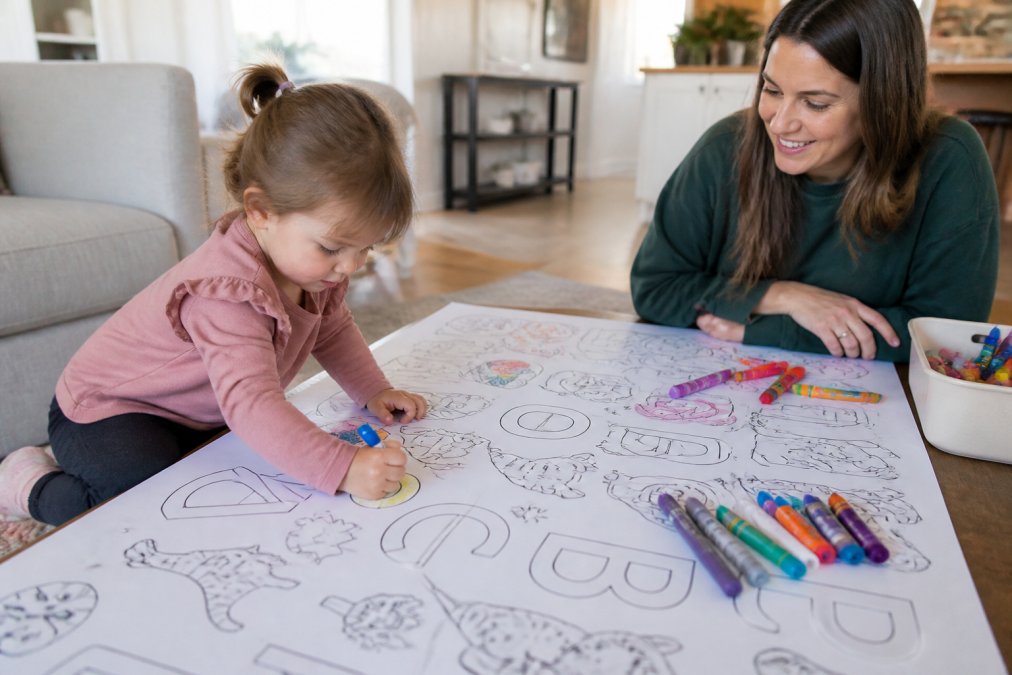
Large coloring posters for kids work best when they're anchored flat and the mess is contained before it starts. Tape the sheet to a low table or the floor, lay a plastic cloth underneath, and set out only two or three colors at a time.
Step 4: Turn Sheets Into Reusable Coloring Mats for Toddlers
Reusable coloring mats for toddlers are sheets that survive more than one session, either because the paper is heavy enough to wipe clean or because you seal it. Laminating a finished sheet or slipping it into a clear plastic sleeve turns any coloring page into a wipe-off mat for dry-erase markers. These durable surfaces eventually become permanent fixtures in a playroom, transitioning from simple drawing tools into meaningful nursery art that evolves alongside your child.
Three Ways to Make a Sheet Reusable (and What Each One Costs You)
| Method | How It Works | Upfront Cost | Durability | Best For |
|---|---|---|---|---|
| Thermal lamination | Heat-sealed plastic pouch bonds to the sheet | About $0.25-$0.75 per sheet at a copy shop; a home laminator runs $25-$60 | Highest, wipes clean for months | Sheets used daily or in the car |
| Clear plastic sleeve | Sheet slides into a heavyweight page protector | About $0.10-$0.30 per sleeve | High, replace sleeve when it clouds | Rotating mats and travel use |
| Contact paper seal | Self-adhesive clear film pressed over both sides | About $0.15-$0.40 per sheet | Moderate, edges can peel | One-off projects and odd sizes |
A common pattern is to laminate only the sheets your child returns to weekly. Laminating everything wastes money and creates a stack of slick pages that crayons can't grip.
The Dry-Erase Detail Most Guides Skip
Dry-erase markers only wipe cleanly off a non-porous surface. On bare cardstock, the ink soaks in and becomes permanent. That's why the seal matters more than the paper weight for reusable mats.
A few practical rules:
- Use low-odor dry-erase markers, not washable markers, on laminated sheets. Washable marker ink bonds to plastic and smears instead of lifting.
- Wipe with a microfiber cloth or a damp paper towel. A soaking wet cloth can seep under the laminate edge and delaminate the sheet.
- Refresh a cloudy laminate with a drop of rubbing alcohol on a cloth, then dry immediately.
- Skip the seal entirely if your child prefers crayon texture. Crayon on laminate feels slippery and frustrates toddlers who press hard.
A practical approach:
Alphabet Table Size Coloring Sheet →
- Laminate or sleeve sheets your child colors repeatedly
- Keep one reusable mat in the car or diaper bag
- Rotate reusable mats monthly so they stay interesting
- Wipe with a damp cloth, not a soaking wet one
- Store laminated mats flat, heat and weight can warp the plastic
Step 5: Store and Organize Printable Collections
Printable collections and physical sheets both fall apart from bad storage faster than from heavy use. Flat storage beats rolled storage every time, because creases become weak points where paper tears.
Build a DIY Durable Toddler Sketchbook
The most durable storage system for loose coloring sheets is to bind them into a sketchbook your child can flip through. This turns a pile of pages into a single object that survives being carried, dropped, and shoved into a bag.
A simple binding method:
- Stack 10-20 finished or blank sheets, all the same size.
- Tap the stack on a flat surface so the edges align.
- Clamp the left edge with binder clips.
- Brush a thin layer of white school glue along the clamped edge and let it dry for 30 minutes.
- Add a second glue layer, then press a strip of bookbinding tape or duct tape over the spine while the glue is still tacky.
- Remove the clips after an hour.
Storage Conditions That Actually Matter
Paper durability is as much about the environment as the material. A few conditions accelerate damage:
- Humidity above 60% causes cardstock to curl and promotes mold in stacked sheets. Store in a climate-controlled room, not a garage or basement.
- Direct sunlight fades printed images and makes paper brittle over months.
- Weight on top of a stack flattens texture and can fuse pages if humidity is high. Keep stacks under 2 inches tall.
- Plastic bins without airflow trap moisture. If you use a bin, add a silica gel packet and crack the lid periodically.
Digital Organization That Saves Reprinting
Most families reprint the same pages because they can't find the file. A naming convention solves this faster than any folder system:
- Format:
theme_size_age.pdf, for example,animals_table_2yr.pdf - Keep a single "current favorites" folder with no more than 10 files
- Back up to cloud storage so a lost device doesn't mean lost downloads
- Delete duplicates monthly; a cluttered folder is the same as no folder
A simple organization system:
- Sort by theme (animals, vehicles, holidays, alphabet)
- Sort by size (table-sized, poster, standard)
- Keep a "current favorites" folder at the front
- Back up digital downloads to cloud storage
- Bind finished sheets into a sketchbook instead of leaving them loose
Common Mistakes That Ruin Durable Coloring Sheets for Toddlers
Most ruined sheets fail for one of five predictable reasons, and every one of them is preventable. Fix these and your sheets last dramatically longer.
The biggest offenders:
- Using 20 lb printer paper for marker work. The paper bleeds and tears. Switch to 65 lb or 80 lb cardstock.
- Taping sheets to walls with standard tape. The paper sags and rips at the tape. Use flat surfaces or removable putty.
- Letting kids press hard with fine-tip markers. The tips break and the paper soaks through. Use chunky or washable markers instead.
- Storing sheets rolled up. Creases become tear points. Store flat.
- Skipping the protective layer underneath. Marker soaks through to the table. Always use a mat or plastic cloth.
Frequently Asked Questions
What are the best coloring options for toddlers?
For toddlers, look for large-format sheets with simple lines, big shapes, and friendly faces. Table-sized sheets measuring 30x50 inches give little hands room to work without crowding. Pair them with chunky crayons or washable markers designed for small grips. Cherry Creek Lane's Alphabet Table Size Coloring Sheet ($19.99) is a solid starting point because the high-quality print holds up to repeated coloring sessions and the large format works for siblings sharing space.
How can I make coloring activities last longer for toddlers?
Choose durable coloring sheets printed on heavier paper so they survive marker bleed and repeated use. Set up a dedicated coloring station with washable coloring supplies for toddlers within reach, and rotate sheets weekly to keep interest high. For reusable coloring mats for toddlers, slide sheets into a clear plastic sleeve and use dry-erase markers, then wipe clean. Large coloring posters for kids also work well taped to a wall or table so toddlers can move around instead of sitting still.
Are coloring sheets good for kids?
Yes. Coloring supports fine motor skills, hand-eye coordination, and early learning through color and trace activities. Large sheets encourage artistic expression and sensory play without screens. For toddlers specifically, the physical act of gripping a chunky crayon and filling large shapes builds the same muscles used for handwriting later. Durable coloring sheets for toddlers extend that benefit because the paper holds up through many sessions instead of falling apart after one use.
What paper weight works best for durable coloring sheets for toddlers?
Aim for 65 lb cardstock or heavier for sheets toddlers will reuse. Standard 20 lb printer paper wrinkles and tears quickly under marker pressure. Heavier cardstock resists bleed-through, stays crease-free longer, and handles washable markers without pilling. If you print at home, set your printer to the cardstock setting and let ink dry fully before handing sheets to a toddler. Pre-printed sheets from brands using heavy-duty paper remove the guesswork.