

Teaching Kids Time Management With Calendars
Table of Contents
- Why Calendars Work for Teaching Kids Time Management
- Choose the Right Calendar for Your Family
- Time Management Activities for Kids: Getting Started
- Build a Kids Weekly Schedule Template That Sticks
- Create a Visual Schedule for Kids on Your Calendar
- Mark Important Dates and Teach Calendar Skills
- Make It a Routine: Daily Calendar Check-Ins
- Frequently Asked Questions
Last Updated: October 14, 2026
Why Calendars Work for Teaching Kids Time Management
Calendars are one of the most effective tools for teaching kids time management, making abstract concepts like "next week" concrete and visible.
Visual planning tools can transform family schedules. A wall or table-sized calendar helps kids anticipate events, connect days to weeks, and think ahead.
When kids help color or decorate a calendar, they become invested and check it regularly, a habit that builds time awareness naturally.
Here's what makes calendars so powerful for teaching kids time management:
- They turn invisible time into something visible and tangible
- Kids can see the full month or year at once
- Important dates stand out visually
- Children develop ownership when they help create the calendar
- Marking dates teaches calendar skills and date reading
- Regular check-ins build routine and accountability
Choose the Right Calendar for Your Family
The right calendar depends on your family's needs and your children's ages. Giant, coloring-friendly calendars offer advantages standard ones don't.
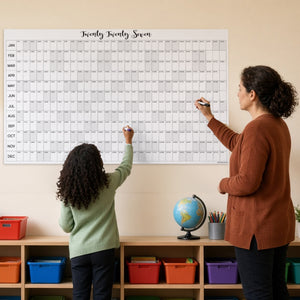
Wall calendars let everyone see the plan at a glance. Hang one in the kitchen and it becomes the hub of family planning.
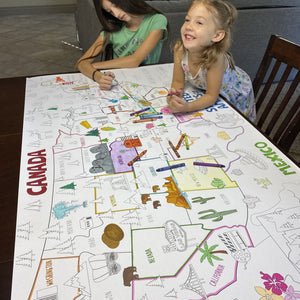
Table-sized calendars work best when you want kids involved from the start: laying one flat lets children color and personalize it before hanging it up.
Digital calendars offer convenience and reminders, but kids forget them because they're hidden on a device.
For teaching time management specifically, we recommend starting with a physical calendar your kids can see and touch. The American Academy of Pediatrics guidance on screen time supports screen-free planning tools for younger children. A giant, colorful calendar from Cherry Creek Lane, like the Summer Activity Calendar Coloring Sheet, gives you the best of both worlds: a planning tool that's also a creative project.

Time Management Activities for Kids: Getting Started
Start simple. The goal isn't perfection, it's building awareness that time can be planned.
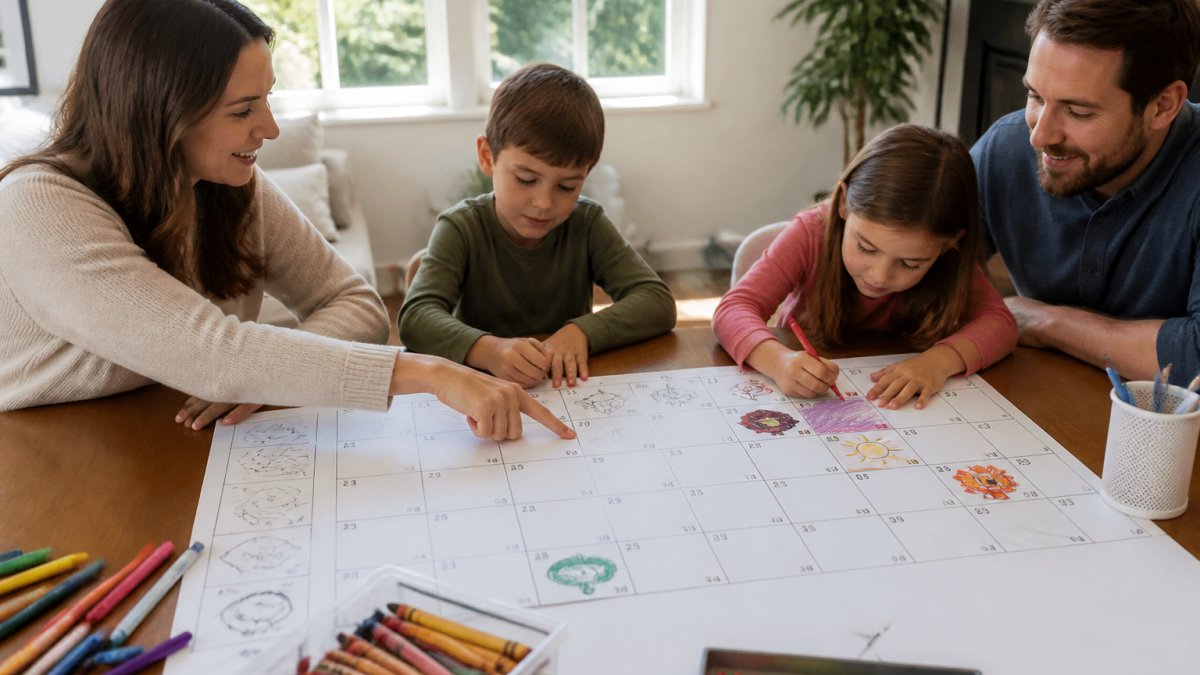
Begin with one activity: Pick a single calendar-related task rather than overwhelming kids with multiple systems.
Keep it age-appropriate: Three-year-olds can learn "today" and "tomorrow." Seven-year-olds can understand weeks and months. Teens can plan across multiple months.
Practice calendar reading together. Point to today's date. Count forward to next Friday.
Use the calendar for real planning. Fill it with actual family activities, appointments, and deadlines. When kids see their soccer game marked, they understand why planning matters.
Try these activities to make learning engaging:
- Count days until a favorite event
- Mark birthdays and special occasions with stickers
- Color-code different types of activities
- Practice saying dates aloud together
- Play "when is it?" games (When is your birthday? When is Thanksgiving?)
- Let kids decorate their section of the calendar with drawings or stickers
Build a Kids Weekly Schedule Template That Sticks
A weekly schedule template gives structure without overwhelming kids. Match it to your child's developmental stage, because a layout that works for a seven-year-old will frustrate a four-year-old.
Match the Template to the Age
Preschoolers (ages 3-5): Use a picture-based strip, not a grid. Lay out four to six cards, wake up, breakfast, play, lunch, nap, outside time, and let your child move a clothespin along as each block finishes.
Elementary-age children (ages 6-10): Use a five-column weekday grid with three rows: Morning, After School, Evening. Write times only for fixed anchors (school start, bedtime) and leave the rest as open blocks your child fills in.
Preteens (ages 11-13): Use a full seven-day grid with 30-minute increments and a blank "buffer" column.
Build the Template in Four Steps
-
Draw the grid on paper first. An 11" x 17" sheet or poster board works well. Kids who draw the grid themselves remember the layout.
-
Fill in the fixed anchors in pen. School hours, bedtime, meals, and any recurring lessons go in first. These don't move.
-
Add flexible blocks in pencil. Homework, free play, chores, and reading time go in next; pencil signals they can shift.
-
Leave one empty row at the bottom labeled "Buffer." Write in anything that ran long or got added mid-week. Without it, kids learn that a missed block means the whole plan failed.
Teach Time Estimation Alongside the Template
A weekly template only works if kids can guess how long things take. Most children under ten overestimate what they can finish in an hour and underestimate transitions. Build estimation in:
-
Before the week starts, ask your child to guess how long each homework block will take. Write the guess in the corner, then compare it to reality after the week. No judgment, just data.
-
Use a visual timer for transitions. A sand timer or kitchen countdown timer works better than a phone alarm because kids can see time draining. Set it for the gap between "homework done" and "dinner."
-
Add a five-minute buffer between every two blocks. If soccer ends at 5:00 and dinner is at 5:30, write "5:00-5:05 transition" in the buffer row. Kids learn that back-to-back scheduling is unrealistic.
A Sample Weekly Template Structure
| Day | Morning Routine | School/Learning | Afternoon | Evening | Buffer |
|---|---|---|---|---|---|
| Monday | Wake, breakfast, dress | 8am-3pm | Snack, homework (est. 30 min), play | Dinner, bedtime routine | 5:00-5:05 transition |
| Tuesday | Wake, breakfast, dress | 8am-3pm | Activity/sport, homework (est. 20 min) | Dinner, bedtime routine | 5:30-5:35 transition |
| Wednesday | Wake, breakfast, dress | 8am-3pm | Snack, homework (est. 30 min), play | Dinner, bedtime routine | 5:00-5:05 transition |
| Thursday | Wake, breakfast, dress | 8am-3pm | Activity/sport, reading | Dinner, bedtime routine | 5:30-5:35 transition |
| Friday | Wake, breakfast, dress | 8am-3pm | Snack, free play | Family time, later bedtime | 4:30-4:35 transition |
| Saturday | Later wake, breakfast | Free time | Activity/outing | Dinner, family time | Open |
| Sunday | Later wake, breakfast | Prep for week | Family activity | Early bedtime routine | 6:00-6:15 week review |
Print it and post it. A visible weekly schedule keeps everyone on the same page. Kids can check what's next without asking.
Review it together each Sunday. Spend five minutes on the week ahead: ask what kids are excited about, point out changes, then ask, "Which day do you think will be the busiest?" That question builds planning awareness more than any worksheet.
Summer Activity Calendar Coloring Sheet →
Create a Visual Schedule for Kids on Your Calendar
Visual schedules work because kids process images faster than text. But the standard advice, color-code everything, add icons, make it big, falls apart for kids with attention, visual-processing, or executive-function differences. A calendar that helps one child can overwhelm another. Tailoring these tools to individual sensory needs remains essential for establishing consistent routines, much like the intentional approach required for rotating Montessori toys.
Start With the Standard Visual Setup
Use color coding. Assign each activity type a color, blue for school, green for sports, red for family time.
Add simple icons or drawings. A soccer ball for sports day, a book for reading time, a fork for meals. Kids recognize these symbols quickly, and drawing them together is itself a calendar-reading exercise.
Make it large enough to read from across the room. A wall or giant table-sized calendar works better than a small desk calendar.
Update it weekly. Add the coming week's activities together and let kids mark dates and write events.
Adapt the Calendar for Different Needs
Not every child thrives on a full month-at-a-glance view. For kids with attention or executive-function differences, a crowded calendar often produces anxiety rather than orientation. Here's how to adjust:
For visual-processing needs: Increase contrast and reduce clutter. Use one high-contrast color (dark blue or black) for all text and reserve one bright color (red or orange) for the day's most important item. Skip decorative stickers on busy weeks. If your child has a documented visual impairment, ask their teacher or a vision specialist about font size and spacing first.
For attention needs: Shrink the visible window. Cover the calendar with a sheet of paper revealing only today and tomorrow, and lift it each morning. This "sliding window" keeps focus on what's immediate without hiding the future.
For executive-function needs: Break each event into steps on the calendar itself. Instead of "soccer game Saturday 10am," write three lines: "9:00 pack bag," "9:30 leave house," "10:00 game." The calendar becomes a sequence, not just a date.
For sensory sensitivity: Replace stickers with plain colored dots or washi tape. Some kids find sticker texture or peeling distracting; a hole-punched dot and glue stick does the same job.
Keep the System From Collapsing
A visual schedule only works if it stays current. Two habits prevent the common failure modes:
-
Do a two-minute nightly reset. Before bed, clear yesterday's items and confirm tomorrow's, a quick check that the calendar still matches reality.
-
Have a "parking lot" for unscheduled items. A sticky note or calendar corner labeled "Later" gives kids a place for requests ("Can we go to the park?") without disrupting the week. Review it at the weekly check-in.
The Full Year Activity Calendar Bundle from Cherry Creek Lane gives you twelve 30"x50" calendars, one per month, so a fresh visual schedule stays visible all year.

Mark Important Dates and Teach Calendar Skills
Marking important dates makes planning visible and teaches calendar skills.
Start with familiar dates. Mark birthdays, holidays, and special events kids already know. These anchors help them understand the calendar structure.
Use consistent marking methods. Circle important dates with the same color. Use the same sticker for the same type of event. Consistency builds recognition.
Mark deadlines. Show when school projects are due, library books are due back, and sports season starts. Real deadlines teach that planning prevents last-minute stress.
A common mistake is teaching too much at once.
Make It a Routine: Daily Calendar Check-Ins
A routine transforms a calendar from decoration into a planning tool. Daily check-ins take five minutes but build powerful habits.
Pick a consistent time. Morning works well.
Celebrate milestones. When a marked event happens, acknowledge it: "We did it!
Adjust as needed. If plans change, update the calendar together. Show kids that plans are flexible but planning still matters.
Teaching kids time management with calendars isn't complicated, but it requires patience and consistency.
A giant, colorful calendar from Cherry Creek Lane makes this easier.
Frequently Asked Questions
At what age should kids start using a calendar?
Children as young as 3 can begin recognizing calendar concepts through coloring and pointing to days. Ages 5-6 are ideal for understanding days, weeks, and months. By age 7-8, kids can mark dates, track activities, and start grasping how weeks connect to routines. Start simple with a visual calendar they help decorate, then gradually add complexity as they grow. A large, colorful calendar makes learning engaging and keeps time management skills visible for the whole family.
How can a family calendar help kids manage their time?
A family calendar transforms abstract time into something kids can see and touch. When children mark important dates, plan outings, and watch their weeks unfold visually, they develop time awareness and learn to anticipate what comes next. This reduces anxiety about transitions and helps kids understand how tasks fit into their week. A wall-sized calendar everyone decorated together gets checked regularly, making it a natural part of daily routines and reinforcing planning habits without nagging.
What calendar activities help children understand days and weeks?
Coloring a calendar together, counting down to special events, marking daily tasks with stickers or stamps, and singing days-of-the-week songs all build calendar skills. Have kids decorate the calendar with markers before hanging it, then involve them in adding appointments, birthdays, and family outings. Point to today, yesterday, and tomorrow during daily check-ins. Use the calendar to show how a week connects to a month, and help them see patterns (school days vs. weekends, for example). Hands-on activities make calendar math concrete and memorable.
How do I help my child plan homework and activities on a calendar?
Start by writing or drawing homework due dates and activity times on the calendar together. Break larger tasks into smaller steps and mark each one. For example, if a project is due Friday, mark when research starts, when drafts are due, and when final work happens. Use color coding or stickers to show different types of tasks (school, sports, family time). Review the calendar daily so kids know what to expect and can estimate how much time they have. This builds time estimation skills and helps prevent last-minute scrambles.
Shop the sheets from this post
-
 Best SellerSale
2026-27 School Year Calendar
Regular price $19.99 USDRegular price$24.99 USDSale price $19.99 USDBest SellerSale -
 Best SellerSale
Summer Activity Calendar Coloring Sheet
Regular price $19.99 USDRegular price$24.99 USDSale price $19.99 USDBest SellerSale -
 Best SellerSale
2026-27 Classic School Year Calendar
Regular price $19.99 USDRegular price$24.99 USDSale price $19.99 USDBest SellerSale


