

Table of Contents
- Giant Coloring Pages vs Printer Paper: Quick Comparison
- Understanding Paper Weight, GSM, and Durability for Coloring
- Surface Texture: Matte vs. Glossy and What Works for Coloring
- Large Coloring Posters for Kids: Why Size Matters
- Best Paper for Coloring Markers: Cardstock vs. Standard Copy Paper
- Screen-Free Family Activities: The Real Value of Giant Coloring Sheets
- Cost-Effective Printing Solutions and Long-Term Value
- Environmental Impact and Archival Quality Considerations
Last Updated: August 22, 2026
Giant Coloring Pages vs Printer Paper: Quick Comparison
Giant coloring pages (30" × 50") are engineered to handle markers, crayons, and colored pencils without buckling or bleeding through. Standard printer paper, designed for text and light graphics, uses lower-quality stock with poor fiber density and opacity, causing markers to bleed through and paper to buckle when wet.
The difference is fundamental: giant coloring pages use 80-100+ GSM paper stock versus 20-24 GSM for standard copy paper. At Cherry Creek Lane, we've designed our giant coloring sheets specifically for families who want durable, screen-free engagement without paper failure.

| Feature | Giant Coloring Pages | Standard Printer Paper |
|---|---|---|
| Paper Weight (GSM) | 80-100+ GSM | 20-24 GSM |
| Bleed-Through Risk | Minimal | High |
| Durability | Excellent | Poor |
| Best For | Markers, crayons, colored pencils | Light pencil work only |
| Size Options | 30"x50" (table-sized) | 8.5"x11" standard |
| Cost | $19.99 per sheet (Cherry Creek Lane) | $0.01-0.05 per sheet |
| Longevity | Years with proper storage | Weeks to months |
Understanding Paper Weight, GSM, and Durability for Coloring
GSM (grams per square meter) determines how well paper handles coloring media. Standard copy paper runs 20-24 GSM, which buckles easily when wet markers or saturated colored pencils are applied (tappi.org). Giant coloring pages use 80-100+ GSM paper, substantially thicker and more rigid, with higher fiber density that resists buckling and prevents bleed-through (tappi.org).
How GSM and Paper Weight Affect Marker and Crayon Performance
Low-GSM paper absorbs marker liquid too quickly, causing fibers to swell and sheets to warp. With crayons and colored pencils, lower density means pigment sinks into the paper rather than sitting on the surface, creating dull, uneven appearance.
Higher-GSM paper keeps markers and pencils on the surface longer, delivering better color saturation and layering ability. The paper's tooth (surface texture) also matters: smoother paper works better for markers, while more texture grabs colored pencils and prevents slipping.
Preventing Ink Bleed-Through and Buckling
Bleed-through occurs when ink saturates fibers and passes through to the back. Higher-GSM paper has tighter fiber density, so ink sits on the surface longer before absorption. Buckling happens when fibers absorb moisture unevenly; thicker paper distributes moisture across more fibers, making swelling less noticeable.
With giant coloring pages, you can layer colors immediately without waiting for sections to dry, making them ideal for group activities.
Surface Texture: Matte vs. Glossy and What Works for Coloring
Matte finishes have microscopic peaks and valleys (tooth) that catch marker and pencil tips, delivering better control and vibrant color. Glossy surfaces are too smooth; markers slide around and create uneven application. Giant coloring pages use matte or semi-matte finishes optimized for markers, crayons, and colored pencils.
Large Coloring Posters for Kids: Why Size Matters
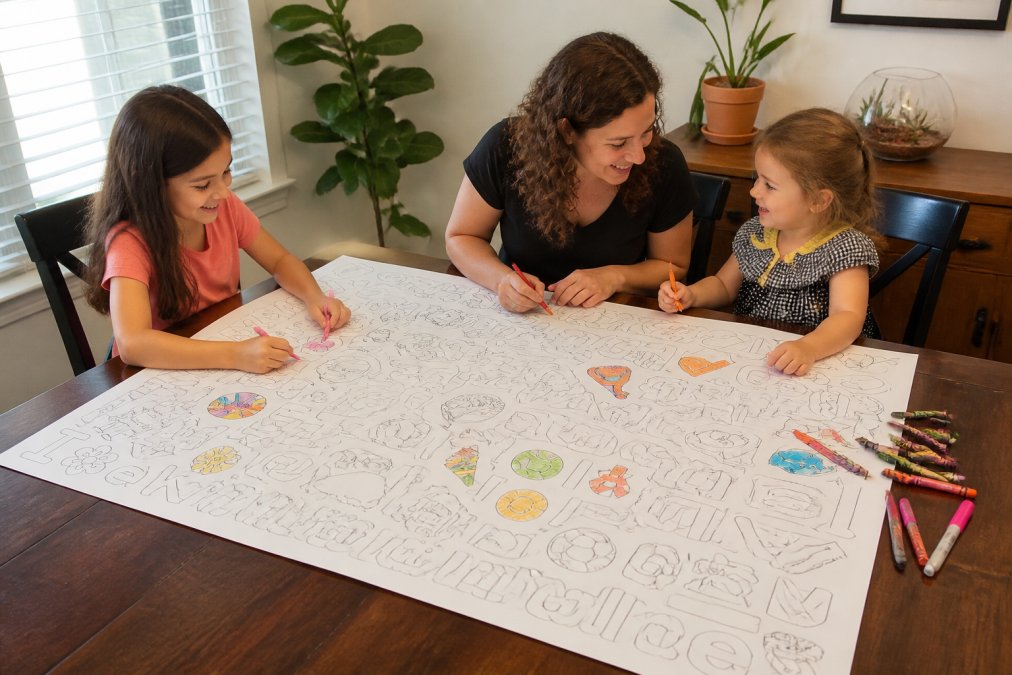
A 30-by-50-inch sheet lets multiple children work simultaneously without crowding. Large posters reduce pressure, kids feel less self-conscious about mistakes on massive sheets where errors are tiny relative to the whole. Teachers and homeschooling parents use large coloring posters as group learning tools for mixed-age groups.
How to Print Large-Format Coloring Posters at Home
Home inkjet printers max out at 11 inches wide, so larger sizes require either tiling (printing multiple sheets and taping together) or a commercial printer. Local print shops handle large-format jobs for $5-$15 for a 24-by-36-inch poster. Specify matte finish and request 100 GSM minimum cardstock.
For home tiling, use the heaviest cardstock your printer can handle, print in high-quality mode, and use low-tack painter's tape to avoid damage.
Best Paper for Coloring Markers: Cardstock vs. Standard Copy Paper
Cardstock (65-110 GSM) is substantially thicker than copy paper (20-24 GSM) and the clear winner for marker work. Standard copy paper buckles and bleeds through immediately. Cardstock resists this, keeping ink on the surface longer for richer color saturation and layering ability. engaging colouring books.
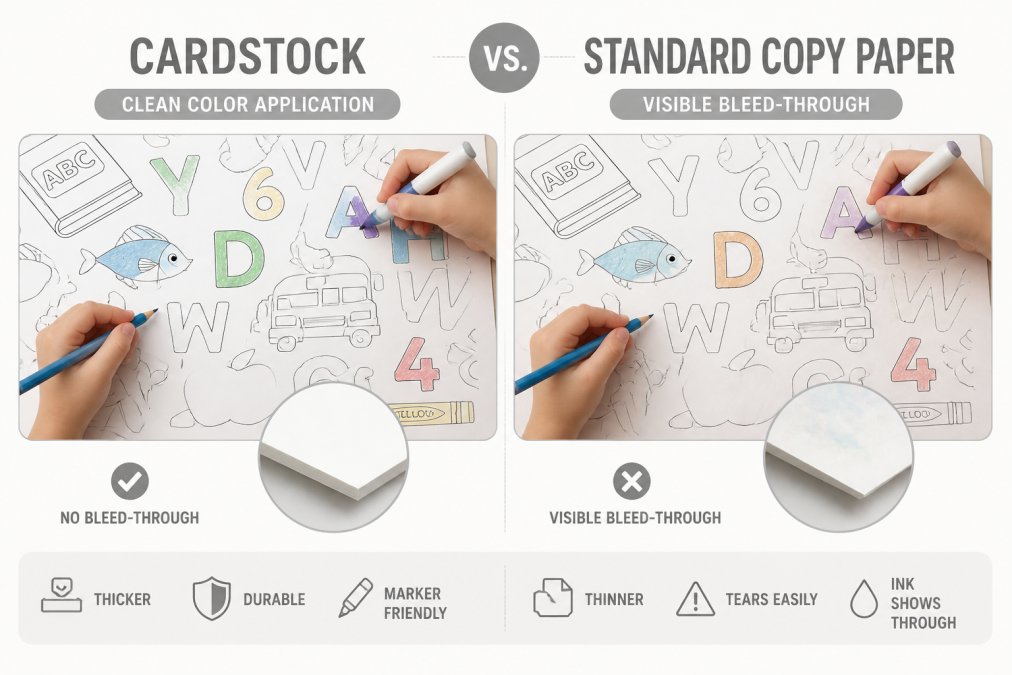
The trade-off is cost and printer compatibility. Many home printers can't feed cardstock reliably. Pre-made giant coloring pages from Cherry Creek Lane eliminate these problems at $19.99 per sheet, you're paying for paper engineered to last.
Screen-Free Family Activities: The Real Value of Giant Coloring Sheets
Giant coloring sheets offer shared physical experiences where multiple people work simultaneously, something screens can't provide. When a parent and child color together on a large sheet, they naturally talk, collaborate, and make decisions together.
Educators use large coloring posters as teaching tools; mixed-age groups work on the same sheet with older children helping younger ones. Adults find coloring meditative, and giant sheets allow multiple adults to color together as a social activity.
Cherry Creek Lane's monthly subscription delivers themed sheets throughout the year, removing friction in finding screen-free activities and building them into family routines.
Cost-Effective Printing Solutions and Long-Term Value
Standard copy paper costs $0.01 per sheet but delivers poor value. A giant coloring page at $19.99 can be used by multiple children simultaneously, colored on both sides, and stored for years.
If printing your own large-format pages, factor in printer costs ($300-$1,000) and specialty cardstock ($0.50-$2.00 per sheet). Print services cost $5-$15 per poster. For regular use, pre-made sheets become cost-effective. Cherry Creek Lane's subscription model further reduces per-sheet cost through monthly discounts.
Environmental Impact and Archival Quality Considerations
Standard copy paper often contains minimal recycled content and isn't archival, yellowing within 5-10 years (loc.gov). Giant coloring pages use archival-quality, acid-free paper that resists yellowing and deterioration.
Cherry Creek Lane products are made in the USA and emphasize durability, one sheet lasting five years generates less waste than five sheets lasting one year each. For archival storage, keep sheets in acid-free folders away from direct sunlight and humidity.
The choice between giant coloring pages and printer paper isn't close if you value durability and user experience. Standard printer paper isn't designed for sustained coloring with markers or crayons. Giant coloring pages from Cherry Creek Lane deliver the paper quality, size, and durability families need. At $19.99 per sheet, you're investing in hours of screen-free engagement and a product engineered to last. Shop Coloring Sheets and transform family time into something memorable.
Frequently Asked Questions
Are giant coloring pages worth the extra cost compared to printer paper?
Giant coloring pages at $19.99 each offer durability, pre-printed designs, and larger format (30" x 50") that keeps multiple children engaged simultaneously. Standard printer paper requires assembly, ink costs, and printer wear. For families seeking screen-free activities that last through multiple uses, giant coloring pages deliver better long-term value and eliminate the frustration of taping sheets together.
What kind of paper is best for giant coloring posters?
High-quality coloring paper should have a GSM (grams per square meter) of at least 100-120 to prevent bleed-through from markers. Matte-finish paper works better for markers and colored pencils than glossy surfaces, which cause colors to slide. Cardstock (65-110 lb weight) resists buckling when wet. Acid-free, archival-quality paper preserves colors over time, making it ideal for keepsakes.
What markers work best on giant coloring posters?
Alcohol-based markers (like Copic or Prismacolor) require heavier paper with good tooth and fiber density to prevent bleed-through. Water-based markers are gentler on standard paper but produce less vibrant color saturation. For giant coloring sheets, dual-tip markers with consistent pigment flow work well on matte surfaces. Test on a corner first to avoid disappointment with expensive marker sets.
Can you print your own giant coloring pages at home?
Yes, but with limitations. Most home inkjet or laser printers have paper tray capacity of 8.5" x 11" or 11" x 17" at best. Printing larger requires tiling multiple sheets together, which creates visible seams and wastes ink. Professional printing services handle large-format output but add cost and shipping time. Pre-made giant sheets eliminate assembly hassle and guarantee consistent quality.
This article was written using GrandRanker