

Table of Contents
- Why Screen-Free Activities Matter for Toddler Development
- Sensory Play Activities That Build Fine Motor Skills
- How to Engage Siblings of Different Ages with One Activity
- Gross Motor Movement Games and Active Play
- Arts and Crafts That Spark Creative Expression
- Quiet Time Activities for Toddlers That Build Independence
- Household Items and Natural Materials for Open-Ended Play
- Planning Screen-Free Days: A Practical Framework
Last Updated: August 21, 2026
Why Screen-Free Activities Matter for Toddler Development
Screen-free activities build the neural pathways that shape how your child thinks, moves, and connects with the world. Hands-on play develops fine motor skills, problem-solving abilities, and emotional regulation that screens cannot provide. Toddlers who engage in unstructured, screen-free play show stronger attention spans, better impulse control, and more advanced language development (peer-reviewed research). Open-ended play builds cognitive flexibility, sensory exploration strengthens neural connections, and physical movement develops gross motor coordination.
Screen-free activities also reduce parental burnout. When you have structured, engaging activities ready, you're not scrambling at 3 p.m. or negotiating screen time, you're simply present, watching your child discover something new.
Sensory Play Activities That Build Fine Motor Skills
Sensory play is one of the most powerful tools for toddler development. When children explore different textures, temperatures, and materials, they build fine motor skills and hand-eye coordination that support writing, drawing, and self-care tasks.
Sensory Bins and Tactile Exploration
A sensory bin is a container filled with materials your child can touch, pour, scoop, and manipulate. Toddlers develop finger strength, hand-eye coordination, and concentration as they spend 15-30 minutes engaged with one activity (aap.org).
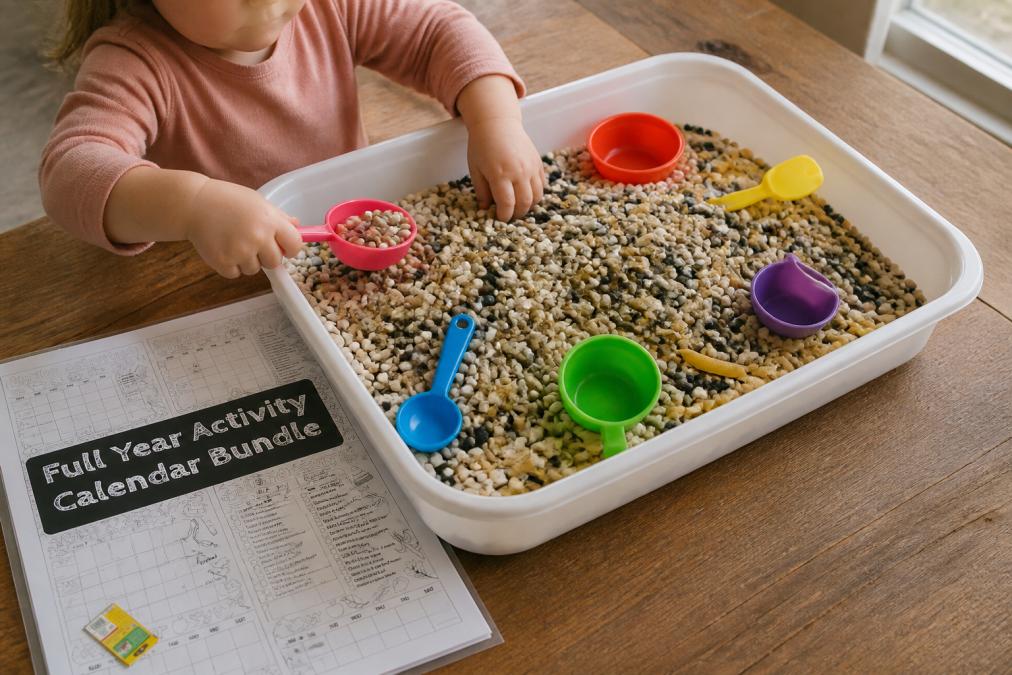
How to set up a sensory bin:
- Choose a shallow container (plastic storage bin, baking pan, or large mixing bowl)
- Fill with one primary material: dried beans, uncooked rice, kinetic sand, water beads, or crinkled paper
- Add safe tools: wooden spoons, measuring cups, small scoops, funnels, or tweezers
- Rotate materials every 2-3 weeks to maintain novelty
- Supervise closely, toddlers explore with their mouths, so ensure all materials are non-toxic
The beauty of sensory bins is their flexibility and affordability. Rice, dried pasta, and beans cost pennies. The engagement and skill development are invaluable.
Water Play and Pouring Activities
Water play builds motor skills while feeling like pure fun. Pouring, splashing, and transferring water between containers develops hand strength, spatial awareness, and cause-and-effect understanding.
Simple water play setup:
- Fill a shallow bin, large bowl, or sensory table with a few inches of water
- Add cups, pitchers, funnels, sponges, and floating toys
- Let your child pour and explore for 20-30 minutes
- Dress them in clothes that can get wet or use a waterproof apron
- Set up outdoors or on a tile floor for easy cleanup
Water play is especially valuable for toddlers who need to burn off energy or calm down. The repetitive motion of pouring is soothing, and the activity naturally holds attention without requiring complex rules or outcomes.
How to Engage Siblings of Different Ages with One Activity
Finding activities that work for a 2-year-old and a 5-year-old simultaneously is challenging. The answer is to design one experience with built-in flexibility, allowing each child to engage at their own developmental level.
The key principle: open-ended activities naturally accommodate multiple ages. A giant coloring sheet works for a toddler scribbling with crayons and an older sibling creating detailed pictures. A sensory bin engages the younger child with simple scooping while the older child sorts, counts, or creates patterns.
Strategies for mixed-age engagement:
1. Choose activities with no "right way" to play. Sensory bins, coloring sheets, building with blocks, and water play allow simultaneous participation at different complexity levels.
2. Use larger canvases to reduce competition for space. A giant coloring sheet measuring 50 inches by 30 inches gives each child their own region while keeping them physically close and connected to the same activity (aap.org).
3. Assign roles based on age and ability. In a sensory bin, the older child might organize materials while the younger child explores freely. During water play, the older child might fill containers while the younger child pours. indoor toddler activities.
4. Rotate who "leads" the activity. Let the younger child choose the sensory material or coloring theme. This builds their confidence and keeps the older sibling engaged through novelty.
5. Build in parallel play time. Set up the activity so both children can work independently on the same canvas or in the same bin. Parallel play is developmentally appropriate and often more peaceful than forced collaboration.
Gross Motor Movement Games and Active Play
Toddlers have enormous amounts of physical energy. Structured movement games channel that energy into skill development, building strength, coordination, and confidence while tiring out little bodies in healthy ways.
Movement games that work for toddlers:
1. Obstacle courses. Use pillows, cushions, and furniture to create a simple path. Toddlers crawl under tables, climb over cushions, and balance on low surfaces.
2. Dance and music. Play music and let toddlers move however they want. The rhythm builds coordination and the freedom of movement is pure joy.
3. Ball play. Rolling, kicking, and throwing balls develops hand-eye coordination and leg strength. Start with soft, lightweight balls.
4. Chasing games. Simple chase games build running skills and cardiovascular fitness while keeping everyone laughing.
5. Climbing structures. Age-appropriate climbing equipment develops confidence, strength, and risk assessment.
6. Jumping and hopping. Jumping on cushions or hopping on one foot builds leg strength and balance.
Active play is non-negotiable for toddler development. A child who's spent 30 minutes in genuine physical play is calmer, sleeps better, and is less likely to seek out screens for stimulation.
Arts and Crafts That Spark Creative Expression
Arts and crafts give toddlers a way to express ideas and emotions they can't yet articulate with words. Coloring, painting, and creating with found materials develop fine motor skills while building confidence and creative thinking.
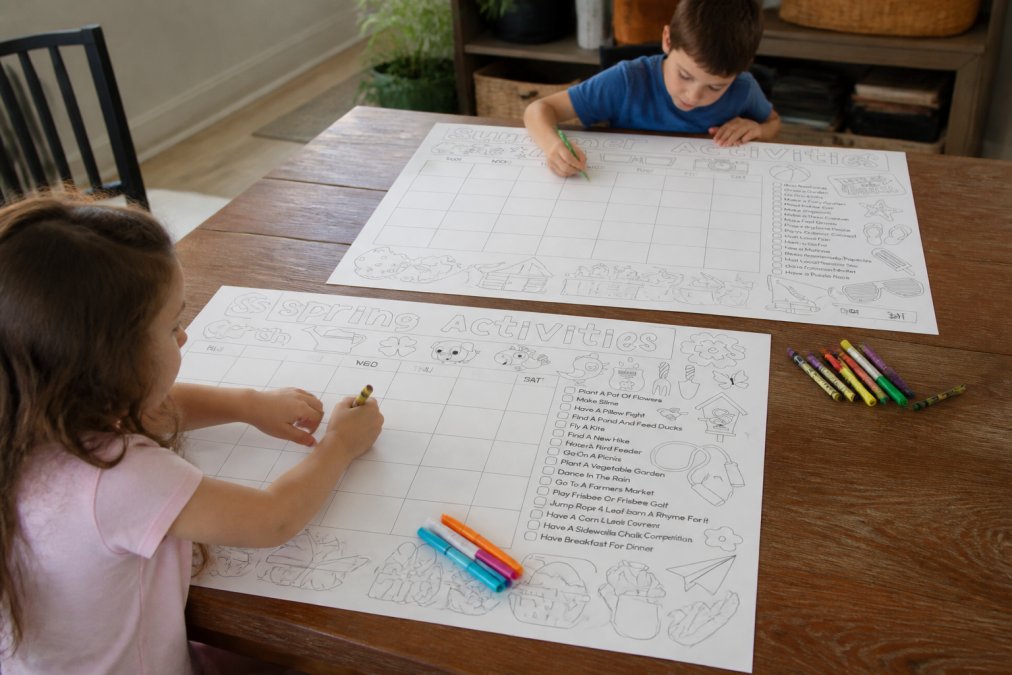
Why giant coloring sheets matter: Standard coloring books are small, limiting, and often frustrating for toddlers. Giant coloring sheets remove these barriers. A 50-by-30-inch canvas gives toddlers room to move their arms freely, reduces pressure to stay inside lines, and makes the activity feel like play rather than a test. Multiple children can work simultaneously without conflict.
Arts and crafts activities beyond coloring:
1. Painting with household items. Toddlers paint with sponges, cotton balls, or their hands. Focus on the process, not the product.
2. Collage with safe materials. Glue and cut-up paper, fabric scraps, or leaves create textured artwork and develop hand strength.
3. Play-dough creations. Homemade or store-bought play-dough builds fine motor skills as toddlers squeeze, roll, and shape.
4. Sticker activities. Peeling and placing stickers develops pincer grip and hand-eye coordination.
5. Nature collages. Collect leaves, twigs, and flowers, then arrange and glue them onto paper.
The goal isn't to produce gallery-worthy work. It's to give your child a safe space to experiment, make choices, and see their ideas come to life.
Quiet Time Activities for Toddlers That Build Independence
Quiet time is essential for toddlers and parents. A structured quiet time routine (30-60 minutes) teaches self-regulation, gives you uninterrupted time, and builds your child's ability to entertain themselves independently.
Activities that support quiet, independent play:
1. Puzzles. Age-appropriate puzzles (4-12 pieces for toddlers) develop problem-solving skills and hand-eye coordination.
2. Picture books. Toddlers engage deeply with picture books, tell stories, and practice language skills independently.
3. Building blocks. Stacking, knocking down, and rebuilding develops spatial reasoning.
4. Quiet sensory activities. A small bin of soft materials, textured toys, or magnetic tiles provides sensory input without requiring your involvement.
5. Magnetic play. Magnetic tiles or magnetic drawing boards keep toddlers engaged in creative, quiet play.
6. Lacing activities. Large beads and thick strings develop fine motor skills and require sustained concentration.
The secret to successful quiet time is consistency. Set the same time each day, establish a simple routine, and stock the space with activities that genuinely hold their attention.
Household Items and Natural Materials for Open-Ended Play
You don't need expensive toys to create engaging screen-free activities. Your kitchen and yard contain dozens of items that spark creativity, exploration, and learning.
Kitchen items that become toys:
1. Wooden spoons, spatulas, and whisks. Toddlers use these to stir, bang, and explore.
2. Plastic containers with lids. Stacking, nesting, and opening containers develops problem-solving and hand strength.
3. Measuring cups and spoons. Water play, sensory bins, or sand play all benefit from these tools.
4. Pasta, rice, and beans. Dried goods fill sensory bins and provide tactile exploration. Ensure supervision.
5. Cardboard boxes. A simple box becomes a house, car, tunnel, or drum. Imagination is the only limit.
Outdoor and natural materials:
1. Sticks, leaves, and rocks. Create nature collages, build structures, or use for sensory exploration.
2. Water and sand. Fill a bin with sand and water for digging, pouring, and building.
3. Chalk. Sidewalk chalk transforms concrete into a canvas without pressure.
4. Mud. Sensory exploration, hand strength, and pure joy. Hose off afterward.
5. Pinecones, acorns, and seed pods. Collect these during walks and use them in sensory bins or nature crafts.
A child's imagination determines the use of these materials, not a manufacturer's design. This open-endedness builds creative thinking and problem-solving skills.
Planning Screen-Free Days: A Practical Framework
Transitioning from screens to screen-free activities requires intentional planning. Without structure, you'll default to devices when your toddler is bored or you're overwhelmed.
Step 1: Audit your current routine. Track when and why screens appear in your day. Understanding the triggers helps you plan alternatives.
Step 2: Plan activities by time of day. Different activities work at different times. Map your day:
| Time of Day | Activity Type | Duration | Example |
|---|---|---|---|
| Morning | Active/Gross Motor | 30-45 min | Movement games, outdoor play |
| Late Morning | Fine Motor/Sensory | 20-30 min | Sensory bin, water play |
| Afternoon | Quiet Time | 30-60 min | Puzzles, books, independent play |
| Late Afternoon | Arts & Crafts | 20-30 min | Coloring, painting, stickers |
| Evening | Family Activity | 15-30 min | Group coloring, nature walk |
Step 3: Gather materials in advance. Stock sensory bin materials, have coloring sheets ready, and keep craft supplies accessible.
Step 4: Set realistic expectations. You won't eliminate screens entirely, and that's okay. The goal is intentional, planned screen-free time.
Step 5: Involve your child in planning. Let toddlers choose from pre-selected activities. This builds autonomy and increases engagement.
Step 6: Create a visual schedule. For older toddlers, a simple picture schedule shows what comes next, reducing negotiation and building predictability.
Step 7: Build in flexibility. Plans change. Your child might be more engaged with one activity than expected. The framework is a guide, not a rigid rule.
For families looking to anchor their screen-free activities in something visually engaging and reusable, the Full Year Activity Calendar BUNDLE from Cherry Creek Lane provides monthly themes and activity ideas that integrate naturally into this planning framework. At $79.96, it covers all four seasons. Seasonal activity calendars like the Winter Activity Calendar Coloring Banner ($19.99) or Spring Activity Calendar Coloring Banner ($19.99) also work well for quarterly planning.

The transition to screen-free activities requires intention, but the rewards are immediate and profound. Your toddler develops stronger motor skills, better emotional regulation, and deeper focus. Your family spends more time together. Start with one screen-free hour this week. Choose an activity from this guide, gather your materials, and see what happens when your child has space to explore, create, and play without digital distraction.
Frequently Asked Questions
How can I keep my toddler busy without a tablet or screen?
Screen-free activities engage toddlers through hands-on exploration and movement. Sensory bins, coloring sheets, water play, and building activities hold attention for extended periods by stimulating multiple senses. Rotate activities every 15-20 minutes to maintain engagement. Giant coloring sheets like those from Cherry Creek Lane work especially well because their size encourages longer focus and allow multiple children to participate together without competing for space.
What are the best toddler sensory play ideas for indoor spaces?
Toddler sensory play ideas include sensory bins with dried pasta, rice, or beans; water play at a low table with cups and funnels; playdough with safe add-ins like cinnamon; and texture boards with different fabrics. These activities develop fine motor skills and hand-eye coordination. For small apartments, use a shallow plastic bin or tray to contain mess. Sensory play also supports cognitive development and problem-solving skills as toddlers experiment with cause and effect.
How do I engage siblings of different ages with the same activity?
Engage siblings of different ages by choosing activities with built-in flexibility. Giant coloring sheets work well because a 2-year-old can scribble freely while a 4-year-old colors within lines. Sensory bins can include different-sized tools for different ages. Gross motor games like obstacle courses or dance sessions naturally accommodate varying abilities. Assign older siblings roles like "activity helper" to increase engagement. Activity calendars help families plan screen-free time together while allowing each child to participate at their own level.
What quiet time activities for toddlers actually work?
Quiet time activities for toddlers that sustain engagement include coloring sheets, puzzles with large pieces, sorting activities, and picture books. These build independent play skills and give parents necessary breaks. Giant coloring sheets provide enough space for solo focus without frustration. Quiet time activities also support cognitive development, concentration, and creative expression. Start with 10-15 minutes and gradually extend duration as your toddler builds attention span and independence.
This article was written using GrandRanker