

Table of Contents
- Step 1: Set Up a Low-Prep Creative Play Space
- Step 2: Pick Screen-Free Family Activities That Fit Your Schedule
- Step 3: Use Creative Play Ideas for Siblings of Different Ages
- Step 4: Find Low-Prep Creative Play for Busy Parents
- Step 5: Adapt Creative Play for Neurodivergent Kids and Tech-Integrated Homes
- Step 6: Encourage Creative Play Without Taking Over
- Common Mistakes That Kill Creative Play Engagement
- Frequently Asked Questions
Last Updated: September 29, 2026
Step 1: Set Up a Low-Prep Creative Play Space
Creative play is any open-ended activity where kids lead the fun, and the setup takes less time than the cleanup. A low-prep space means you spend minutes, not hours, getting ready. This guide from Cherry Creek Lane shows you how to make family time more engaging with creative play, even on your busiest days.
The biggest mistake parents make is overbuilding the play area. A dedicated table, a shelf of supplies, and a clear surface beat a Pinterest-perfect craft room every time. Kids need room to spread out, not a museum.
Start with these basics:
- A table that seats everyone, or floor space with a washable mat
- Crayons, markers, and colored pencils in one easy-to-grab bin
- Paper, cardboard, and tape within reach
- A "no screens" rule during play time
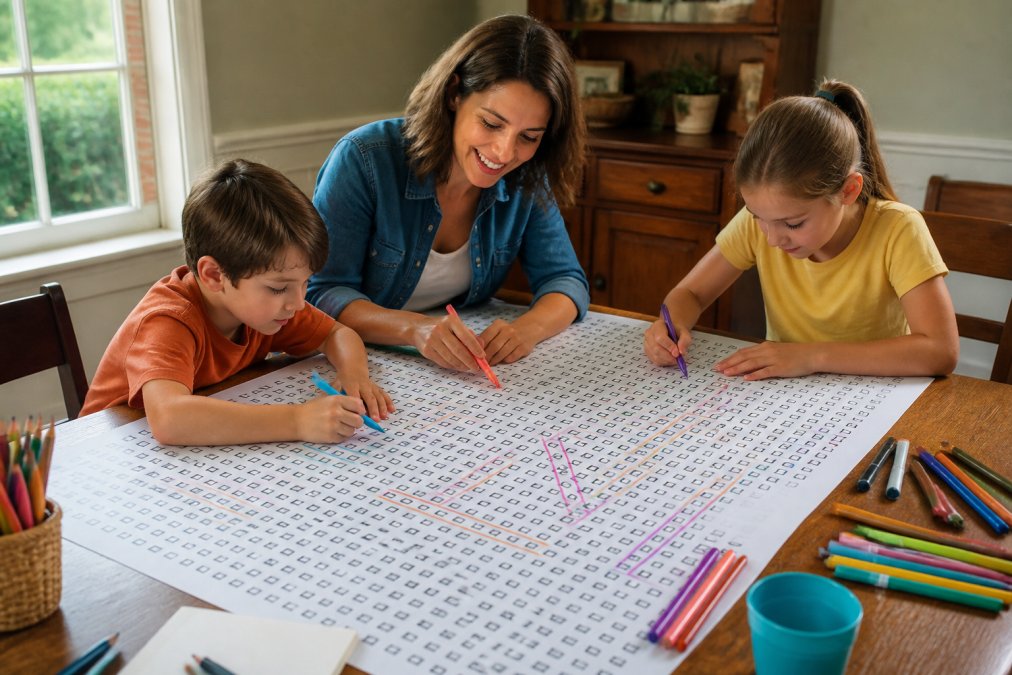
A giant coloring sheet or word search laid across the table turns any dining room into a shared creative zone. The American Academy of Pediatrics guidance on play notes that play builds language, thinking, and social skills, which is exactly what happens when kids work side by side.

Step 2: Pick Screen-Free Family Activities That Fit Your Schedule
Screen-free family activities work best when they match the time you actually have. A 10-minute gap calls for something different than a free Saturday afternoon. The trick is matching the activity to the window, not forcing a big project into a small one. Short bursts of focused attention can also transform these brief intervals into meaningful moments, especially when incorporating mindfulness activities for kids to help everyone reset and reconnect.
Try this simple sorting method:
- 10 minutes or less: quick drawing challenges, one-page puzzles
- 20-30 minutes: coloring sheets, storytelling games
- 1 hour or more: giant puzzles, building projects, themed art
The 15-Minute Micro-Play Method below makes even a rushed evening count.
The 15-Minute Micro-Play Method
Micro-plays are short, planned bursts of creative play built into your daily routine. Fifteen minutes after dinner beats a two-hour weekend session that never happens. Consistency matters more than length.
Here's how it works:
- Set a timer for 15 minutes.
- Pick one open-ended activity, like coloring or a word search.
- Everyone joins in, including parents.
- Stop when the timer rings, even if it's going well.
This keeps play low-pressure and easy to repeat. Many families find that short, regular sessions build stronger habits than occasional big events.
Step 3: Use Creative Play Ideas for Siblings of Different Ages
Creative play ideas for siblings of different ages need one shared activity with room for different skill levels. The goal is a single project everyone can join, not separate activities that split the family into corners. Most ranking guides stop there and hand you a generic list. The useful version segments by developmental stage, because a 3-year-old and a 10-year-old do not engage with the same prompt in the same way.
Match the Prompt to the Stage, Not the Age Gap
Use these rough bands as a starting point. They overlap, and you know your kids better than any chart does.
- Toddlers (roughly 2-3): sensory and motion dominate. They want to tear, squeeze, smear, and stack. Give them a corner of the shared project where destruction is allowed, like a scrap pile of cardboard or a washable mat they can finger-paint on.
- Preschoolers (roughly 3-5): pretend play and simple rules. They can follow a two-step prompt ("draw a house, then add a door") and will happily narrate what they're making.
- Early school-age (roughly 6-8): rule-based games, collections, and fairness matter. They want a turn, a score, or a role with a clear job.
- Pre-teens (roughly 9-12): autonomy and competence. They disengage fast if a task feels babyish, so give them the "director" role: they design the prompt, pick the theme, or run the timer.
Mixed-Age Activities That Actually Hold
Try these pairings, each built so no one is "behind":
Board Games Giant Word Search Puzzle →
- Giant word searches: younger kids color letters and trace shapes; older kids hunt for words and time themselves; pre-teens can build their own word list for the younger ones to find.
- Story building: each person adds one sentence, but assign roles. A toddler contributes a sound or a character name; a pre-teen handles the plot twist.
- Role-playing: assign simple and complex roles. A preschooler is "the customer"; an older sibling is "the shop owner" who has to do the math.
- Art and crafts: same materials, open-ended prompt, different constraints. Younger kids get "use three colors"; older kids get "use only shapes, no outlines."
- Cardboard build: one box, one roll of tape, one rule: everyone adds one thing before passing it on.
Step 4: Find Low-Prep Creative Play for Busy Parents
Low-prep creative play for busy parents comes down to one rule: if setup takes longer than play, it won't happen. Choose activities that start in under two minutes.
Quick low-prep wins:
- Keep a "go bag" of crayons and paper ready
- Use one big sheet instead of many small ones
- Let kids pick the theme
- Skip the cleanup speech, just fold and store
Compare your options before you commit to a routine:
| Activity Type | Setup Time | Best For | Cleanup |
|---|---|---|---|
| Giant word search | Under 2 min | Mixed ages | Low |
| Coloring sheets | Under 2 min | Quiet time | Low |
| Craft projects | 10+ min | Focused kids | High |
| Building games | 5 min | Small groups | Medium |
Step 5: Adapt Creative Play for Neurodivergent Kids and Tech-Integrated Homes
Creative play can be adapted for neurodivergent kids by lowering sensory demands and offering clear, simple choices. Many children focus better with fewer options, softer lighting, and a predictable routine. The activity stays the same; the setup changes.
Helpful adjustments:
- Offer two choices, not ten
- Use noise-canceling headphones if sound bothers them
- Allow movement breaks
- Keep the same play time each day
Step 6: Encourage Creative Play Without Taking Over
The hardest part of creative play is stepping back. Parents who direct every move kill the curiosity that makes play work. Your job is to set up the space, then get out of the way.
Signs You've Crossed From Partner to Director
- You're fixing how your child draws
- You're finishing the puzzle for them
- You're steering the story toward your preferred ending
- You're asking "what is it?" about abstract art
- You're narrating every step out loud
What to Do Instead
Join as a partner, not a supervisor. Concrete moves that work:
- Color your own section. Sit beside them with your own materials. Parallel play is still play, and it models focus.
- Ask open questions, not quiz questions. "Tell me about this part" beats "is that a dog?"
- Narrate your own choices, not theirs. "I think I'll use blue here" invites imitation without demanding it.
- Let the mess happen. A drop cloth and a five-minute warning before cleanup solve most of the anxiety that drives parents to hover.
- Resist the rescue. If a tower falls, wait. The pause is where problem-solving happens.
Common Mistakes That Kill Creative Play Engagement
The fastest way to kill engagement is to make play feel like a test. Kids disengage when play gets graded, rushed, or controlled. Watch for these common mistakes:
- Over-scheduling play into a rigid block
- Correcting your child's creative choices
- Buying too many supplies and overwhelming them
- Skipping your own participation
- Ending play abruptly with no warning
Frequently Asked Questions
What are the benefits of creative play for family bonding?
Creative play builds bonding time through shared focus and cooperation. When families color, solve puzzles, or tell stories together, they create quality time without screens. This strengthens communication and creates memories. Research shows that child-led activities and open-ended play support social-emotional learning and problem-solving skills. Even 15 minutes of daily creative play can improve family connection and reduce stress.
How do you engage siblings of different ages in the same creative activity?
Choose open-ended projects that scale to different skill levels, like a giant coloring sheet or word search. Younger kids can color large areas while older kids tackle detailed sections. Assign roles: one sibling can lead storytelling, another can draw. For mixed ages, use activities that don't require reading, such as sensory exploration or role-playing. This keeps everyone engaged without competition.
What materials are best for encouraging open-ended family play?
Large-format supplies work best for group play. Giant coloring sheets, big puzzles, and wall-sized calendars let multiple people participate. Stock up on crayons, markers, colored pencils, and gel pens. These tools support fine motor skills and creative expression. For budget-friendly DIY materials, use cardboard boxes, tape, and recycled paper. The key is having enough space and tools for everyone to join in.
How can busy parents incorporate creative play into a daily routine?
Use micro-plays: short, 10-15 minute creative sessions built into transitions. Try coloring at the breakfast table, a quick puzzle before dinner, or storytelling at bedtime. Keep a basket of low-prep supplies ready. Schedule creative play like any other appointment. Even small moments add up to meaningful family connection and support work-life balance.
Family time gets crowded out fast, and screens fill the gap before you notice. Cherry Creek Lane makes it easy to reclaim that time with giant, table-sized coloring sheets, puzzles, and wall-sized calendars built for screen-free connection. Every product is made in the USA and shipped from Utah, and the monthly themed coloring sheet subscription keeps fresh fun arriving at your door. Get started with Cherry Creek Lane and turn an ordinary evening into a memory your kids will keep.